

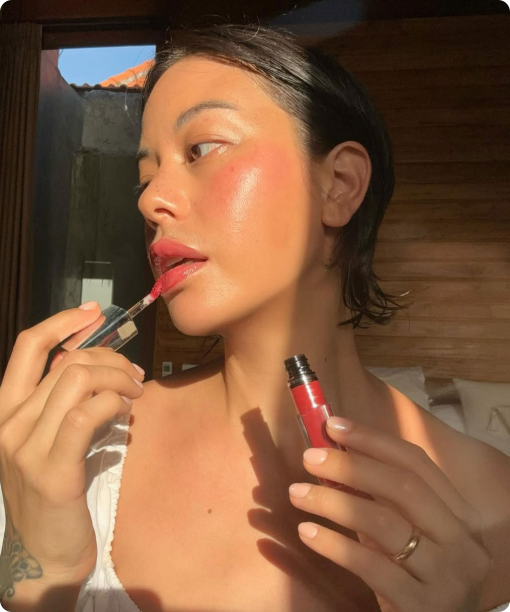
I. From Heavy Makeup to Light Makeup: A Belated Aesthetic Shift
If you ever seriously wore makeup in 2012 or 2016, you probably remember the makeup logic of that era—sculpted features with sharp angles, matte lip gloss to the point of lifelessness, and foundation thick enough to cover an entire life. It was an era where “full makeup is justice,” and I happened to start my writing work related to beauty during that time. That’s why the current makeup atmosphere seems especially precious.
Now, we seem to have collectively entered a “soft girl” phase. Makeup is no longer about reshaping the face, but more like a gentle annotation. This shift didn’t come out of thin air—the three years of the pandemic interrupted people’s obsession with elaborate full makeup, and the natural oscillation of the aesthetic cycle has given “less is more” a modern feel again. The most captivating makeup right now is centered on a dewy, radiant skin base, and those blended, subtle touches of color. It evokes the briefly popular “jelly makeup” look, but with a touch more maturity and romance, and less of the cloying sweetness and artificiality.
While browsing social media recently, I stumbled upon makeup artist Alexandra French’s precise name for this micro-trend: watercolor makeup. The metaphor is apt—like lightly splashing paint onto damp canvas, the colors naturally blend, blurring the edges, while the skin’s natural texture remains clearly visible. Gilbert Soliz, senior makeup artist at MAC Cosmetics, describes it more emotionally: “You can see the fluidity and elasticity of the skin; it’s a seasonal aesthetic shift that makes perfect sense.”
II. Face: Let Blush Be the First Brushstroke
The biggest contributor to this trend is probably our collective fascination with blush. But Soliz reminds us that the line between a watercolor look and a muddy look often depends on technique, not the product itself. His advice is: always use less than you think, and then build up gradually. Press and pat, rather than sweeping. “I let each layer settle on the skin first, then give the next layer space. This way, the color blends into the skin instead of sitting on the surface and forming patches.”
When choosing products, texture is more important than shade. Soliz tends to recommend formulas that are “highly hydrating and lightweight,” rather than traditional powder products. “Think of serums, toners, and a mix of creams and gels—they form a veil on the skin, not a mask.”
Recently, Benefit’s new Juice Stick blush has become a staple in my makeup bag. It has a cool, hydrating feel when applied (coconut water in the formula plays a crucial role), leaving a natural blush as if just touched by a spring breeze. Alexandra French also mentioned Stila’s Convertible Color Liqua-Tint Blush in her post, a multi-purpose product that can be used on both cheeks and lips. The addition of hyaluronic acid and antioxidants allows it to moisturize while providing color. Victoria Beckham’s Colour Wash line offers both blush and contour options. The watery texture melts upon contact with the skin, leaving a hazy, shimmering veil of color.
III. Lips: Reject Mirror-like Finishes, Embrace Blending
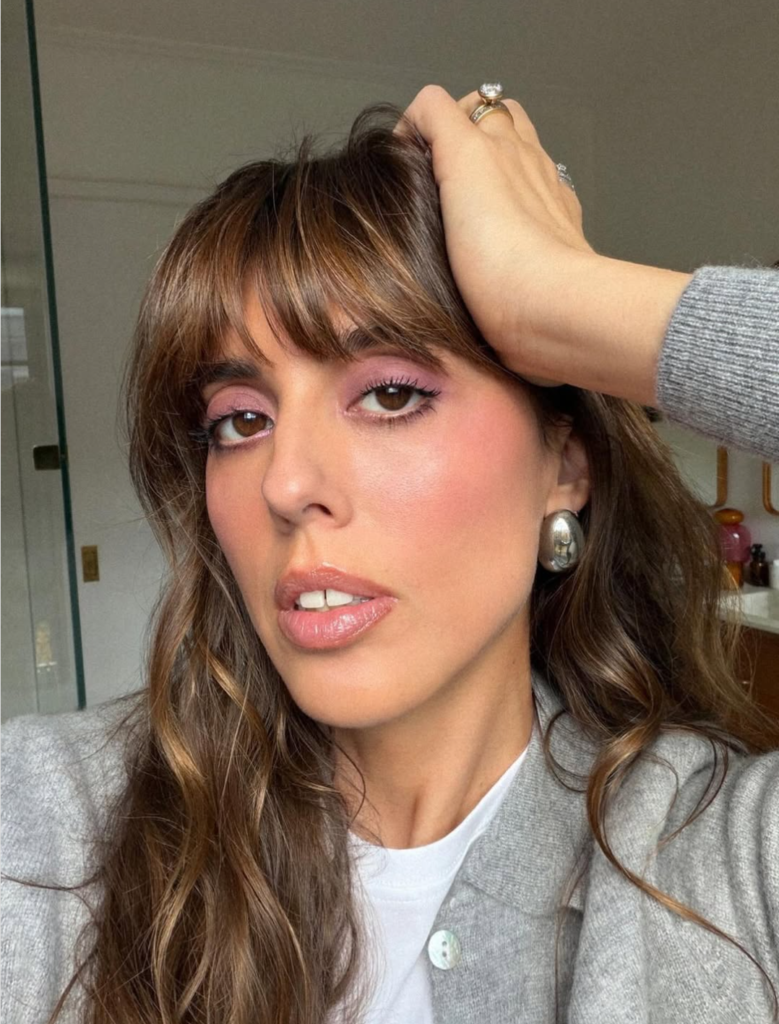
Many people easily equate this trend with “glossy lips,” but the expression of watercolor makeup on the lips is actually more subtle. It doesn’t aim for a high-reflective, mirror-like finish, but rather a soft, hazy, seemingly radiant, dewy look—never overdone, never overpowering.
MAC’s Glow Play lip balm line offers a sheer, juicy color that subtly changes color based on the lips’ pH level, giving the final shade a personalized quality. Laneige’s JuicePop liquid lip gloss follows a “just bitten into a berry” approach, with a subtle shine. Makeup By Mario’s Jelly Jar lip balm invites you to apply it directly with your fingers, allowing the color to blend seamlessly with the natural edges of your lips under the warmth of your fingertips. Regarding color selection (this also applies to other parts of the face), the key isn’t about a specific color, but how you apply it to your skin. If you’re not applying directly with clean fingers, I use makeup artist Katie Jane Hughes’ “brush pretreatment” technique: first, fully load the brush bristles with product, then blend any excess on the back of your hand, leaving the brush semi-saturated. Then, apply it to the lips with a dabbing motion to create a blurred, “lived-in” effect. Recently, I’ve also been forcing myself out of my comfort zone of nude and terracotta shades, trying rose and even pale purple tones—the colors you’d see in Delacroix portraits.
IV. Eyes: Abandon Precision, Embrace Obscurity
The watercolor logic certainly extends to the eyes. Instead of grabbing the most pigmented eyeshadow palette, choose liquid or cream products with a more sheer texture, and gently dab them onto the eyelids with your fingertips, allowing the color to blend naturally like watermarks.
Lately, I’ve been particularly obsessed with Violette_FR’s new Plume eyeshadow line. Their creamy-to-powder texture melts on the skin, ultimately creating a soft-focus, almost filtered-off effect. Violette herself, the brand’s founder, beautifully explains it: the goal of this product is “never intensity or precision,” but rather a sheer, lightweight layer of color that requires almost no skill. Additionally, Versed’s Sheer Stay liquid eyeshadow (especially the shade Haze, a pale purple reminiscent of a patch of water in Monet’s “Water Lilies”) and Armani Beauty’s liquid eyeshadow are also favorites—both can be applied and blended in seconds, the kind of products you can apply with your eyes closed (though it’s best not to actually close your eyes) without making a mistake.
V. On Effortless Refinement
The allure of watercolor makeup perhaps lies in its deconstruction of “perfection.” It doesn’t require a geometric reshaping of the face, nor does it rely on layers of concealer and setting powder. It’s more of an attitude: allowing the skin to breathe, allowing color to flow, allowing the makeup to ultimately present an unforced, hydrated, and vibrant state.
This spring, try using your makeup brushes as paintbrushes and your cheeks as a damp canvas. Use less pressure, leave more blank space. You might discover that the most beautiful makeup often emerges the moment you stop applying pressure.